
Termite Damage Repair in San Diego, CA: When Can Wood Be Repaired vs. Replaced?
Discovering termite damage can leave homeowners with one immediate question: Does the damaged wood need to be replaced, or can it be repaired?
The answer depends on how extensive the damage is, how much sound wood remains, and whether the affected material is structural. Minor, localized damage may be repairable, while extensive deterioration can make wood replacement the safer option.
If you’re dealing with termite damage in a San Diego home, understanding the difference between repairable and severely compromised wood can help you determine what to do next.
Can Termite-Damaged Wood Be Repaired?
Yes. Termite-damaged wood may be repairable when deterioration is limited, and enough sound material remains to support an effective repair.
For example, localized damage to trim, siding, or another non-structural component may not require complete replacement. Structural wood requires closer evaluation because it carries loads or supports other parts of the home.
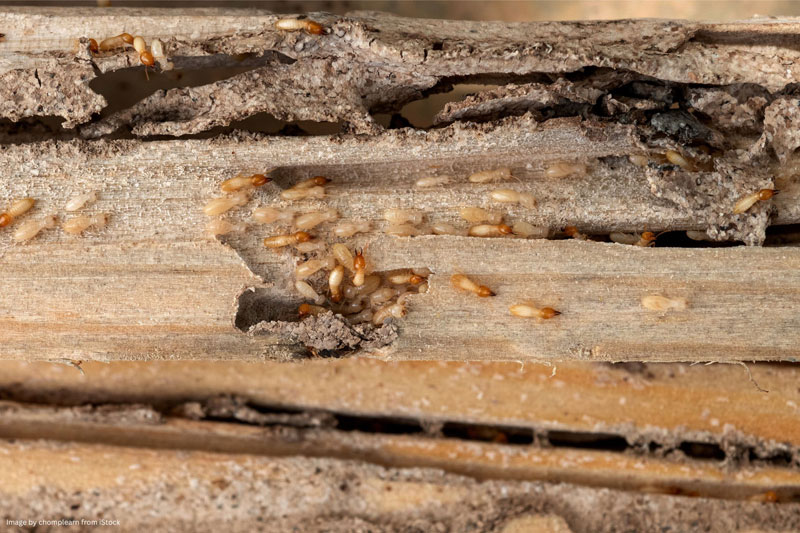
Appearance alone cannot determine the extent of the problem. Termites can create galleries within wood while leaving portions of the exterior relatively intact. The affected material needs to be evaluated to determine how extensive the deterioration is and what type of repair is appropriate.
When Does Termite Damage Require Wood Replacement?
Replacement becomes more likely when deterioration is extensive, or the affected wood has lost too much of its original strength and material.
Wood that crumbles easily, feels unusually soft, shows extensive internal galleries, or has significant material loss may not be a good candidate for a simple localized repair. The location of the damage also matters. Damage to decorative trim does not have the same implications as damage to wall framing, beams, joists, or other structural components.
With structural wood, both the condition and purpose of the component need to be considered. If deterioration has compromised too much of the original material, replacing the affected section may be more appropriate than simply patching the visible damage.
How Do Professionals Decide Between Repair and Replacement?
There is no single percentage of termite damage that determines whether every piece of wood should be repaired or replaced. Each affected area needs to be evaluated based on its condition, location, and function.
An assessment may consider:
- Amount of deterioration: Is the damage isolated, or does it extend through a larger section?
- Remaining sound wood: How much solid, usable material remains?
- Structural role: Does the component support loads, or is it primarily decorative?
- Location and access: Can the affected area be reached and repaired effectively?
- Termite activity: Has the termite problem been identified and addressed before restoration work is completed?
These factors explain why two properties with apparently similar termite damage may require very different repair solutions.
For significant structural deterioration, additional evaluation by an appropriately qualified building or structural professional may also be appropriate.
What Does Termite-Damaged Wood Repair Involve?
The wood repair method depends on what an inspection reveals.
A limited area may be suitable for localized repair, reinforcement, or other restoration work. More extensive deterioration may require removal of the affected section and installation of sound replacement wood. If damage extends into connected components, the repair scope may become larger once those areas are exposed.
The objective is more than improving the appearance of the wood. Repairs should address the deteriorated material and account for the function that the wood performs within the home.
Should Termites Be Treated Before Damaged Wood Is Repaired?
Active termite activity should be addressed as part of the process before damaged areas are fully restored.
Replacing damaged wood while termites remain active does not address the source of the problem. The infestation should first be identified and treated, followed by an evaluation of the affected materials and the appropriate repair work.
This distinction is important: termite treatment addresses the pest problem, while wood repair addresses the physical damage left behind. Depending on the property, homeowners may need both services.
What Should You Do If You Find Termite-Damaged Wood?
Avoid trying to determine the severity of the damage based on the surface alone.
Signs such as soft or crumbling wood, visible galleries, or areas that appear significantly deteriorated can be reasons to arrange for a professional evaluation. These signs do not necessarily tell you how far the damage extends or whether an important structural component is involved.
A professional assessment can help determine the extent of the deterioration and whether the affected wood may be suitable for repair, reinforcement, or replacement.
So, can termite-damaged wood be repaired? Often, yes. But repair is appropriate only when the condition of the remaining material and the function of the affected wood support that approach. When deterioration is extensive, replacement may be the better option.
For termite damage repair in San Diego, CA, a careful assessment provides homeowners with the information needed to make an informed decision about repairing, reinforcing, or replacing affected wood.
Frequently Asked Questions
Can termite-damaged wood always be repaired?
No. Localized deterioration may be repairable, while wood with extensive material loss or compromised structural function may require partial or complete replacement.
How can I tell if termite-damaged wood needs to be replaced?
Soft, crumbling, or visibly deteriorated wood can indicate a problem, but homeowners cannot always determine the full extent of damage from the surface. The condition and structural role of the affected wood should be evaluated before choosing a repair method.
Can termite damage be worse inside the wood than it looks outside?
Yes. Termites can create internal galleries while leaving portions of the exterior surface intact. As a result, visible damage may not show the full extent of the deterioration.
Should termite treatment happen before wood repair?
Active termite activity should be addressed before damaged areas are fully restored. Treatment addresses the infestation, while repair addresses the physical damage left behind.
Can structural wood with termite damage be repaired?
Sometimes. The appropriate solution depends on the extent of deterioration, the amount of sound wood remaining, and the structural function of the affected component. Significant structural damage may require additional evaluation before repairs are performed.
Termite Damage Repair: Repair or Replace?
Minor, localized termite damage does not always require complete wood replacement. More extensive deterioration—especially when structural components are involved—can call for a different approach.
The decision should be based on the actual condition and function of the wood, not simply on what is visible from the surface. Identifying termite activity, assessing the affected material, and selecting the appropriate repair method gives homeowners a clearer path forward.
If you are concerned about termite damage to your San Diego home, United Termite can help you understand the condition of the affected areas and determine what steps may be appropriate.